Search

Tornionjokilaakso & Tornedalen

General informational of the Living lab region

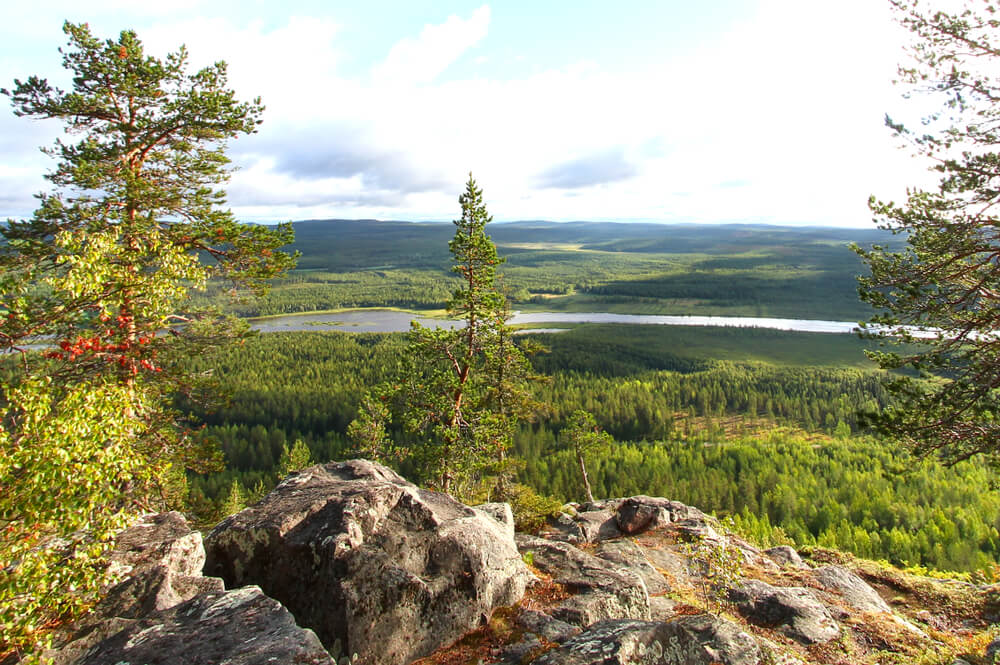
The region is located at the border of Finland and Sweden, in the provinces of Lappi (Lapland)(population 177 161 in 2019) in Finland, and Norrbotten (population 248 480 in 2023) in Sweden. It is based on the Torne River Valley. Administratively, the municipalities covering the region in Sweden are Haparanda, Kiruna, Pajala and Övertorneå, and in Finland Enontekiö, Kolari, Muonio, Pello, Tornio and Ylitornio. The Living Lab focuses specifically on, but is not limited to, the municipalities of Ylitornio (FI) (pop. 3 765 in 2023) and Övertorneå (SE) (pop. 1 965 in 2023).

The northern part of the region is inside the Sámi home area, the Sápmi, where the only indigenous people in the European Union are living in. They have distinctive cultures, identities, and languages.

History, People and Culture

The region is named after the Tornio/Torne River running through the valley into the Gulf of Bothnia, the Baltic Sea. The region became known in the second half of the 18th century by the scientific expeditions and following academic discoveries and reports. These visiting scholars included French geodesic mathematician de Maupertuis, the Italian explorer and composer Acerbi, Swedish botanist Carl von Linné, and Swedish astronomer Andres Celsius, for example.

The main population and economic centers of the region are the (twin) cities of Haparanda and Tornio. The region has its own dialectic form of the Finnish language called meänkieli, meaning ‘our language’, and there is a common Finnish culture that has become known by the Swedish name Tornedalen. The people, the Tornedalian, are considered as a minority group native to the Torne Valley region, who have their own flag combining the colors of the Finnish and Swedish flags.

UNIVERSITY OF OULU

Finland

Dauromattia Zocchi

dauromattia.zocchi@unibg.it

Partner in charge of communication

Profile of the participating organization

Edit Content

The Faculty of Tourism and Hospitality Management (FMTU), which is part of the University of Rijeka, is the only higher education institution in the Republic of Croatia that offers study programs in the fields of tourism, hospitality and sustainable development at bachelor, master and doctoral levels, as well as a wide range of lifelong education programs. The main vision of the Faculty is that the Faculty of Tourism and Hospitality Management is a leader in high education, scientific and professional research in the field of tourism, hospitality and sustainable development in Croatia and the wider region.

In addition, the Faculty conducts significant activities with other higher education institutions in the country and abroad, where the Faculty’s role as a partner in the centers of excellence in tourism and hospitality stands out.

The Faculty also fosters business cooperation with tourism and hospitality companies, local administrations and self-government units, associations and other members of the public. Cooperation with companies in the field of tourism and hospitality, especially with renowned hotels, camps and associations in the Republic of Croatia, is achieved through the implementation of student internships, lifelong education programs, as well as the creation of studies and projects. The Faculty organizes numerous lectures by distinguished experts from practice, which enable students to gain insight into the practical knowledge of our best business people and apply the acquired knowledge in solving real business problems.

The Università degli Studi di Bergamo (UniBg) is a state university located in the Lombardy province, Italy. Since the Libero istituto universitario di Lingue e letterature straniere’s foundation in 1968, new degree courses were born until, in 1992, the institute officially became a University, changing its name to the University of Bergamo.

UniBg has more than 23,000 students enrolled in in 41 degree programmes.

The degree programmes cover a wide range of disciplines and are taught on 3 campuses, Humanities, Economics and Law, and Engineering, located in the city of Bergamo.

UniBg has 8 departments, which promote, coordinate, and organise the research and teaching activities of the educational programmes they are responsible for. These include Human and Social Sciences; Foreign Languages, Literatures, and Cultures; Law; Letters, Philosophy, Communication; Management, Economics, and Quantitative Methods; Engineering; Human and Social Sciences; Business Administration, UniBg has established expertise in participating in and managing EU-funded projects. A staff of more than 650 members, among professors and researchers, assisting academic staff, and administrative and technical staff, provides a dynamic scientific and teaching environment. The Research and Technology Transfer Office staff of UniBg supports the research projects. The strengths of UniBg are, therefore, the wide range of courses offered (also through e-learning projects), the excellent use of the numerous laboratories available to students, the ambitious research centres, and, last but not least, the fact that the university operates in one of the most dynamic areas from both a cultural and economic viewpoint.

UNIVERSITÀ DEGLI STUDI DI BERGAMO

Italy

Economy and Tourism

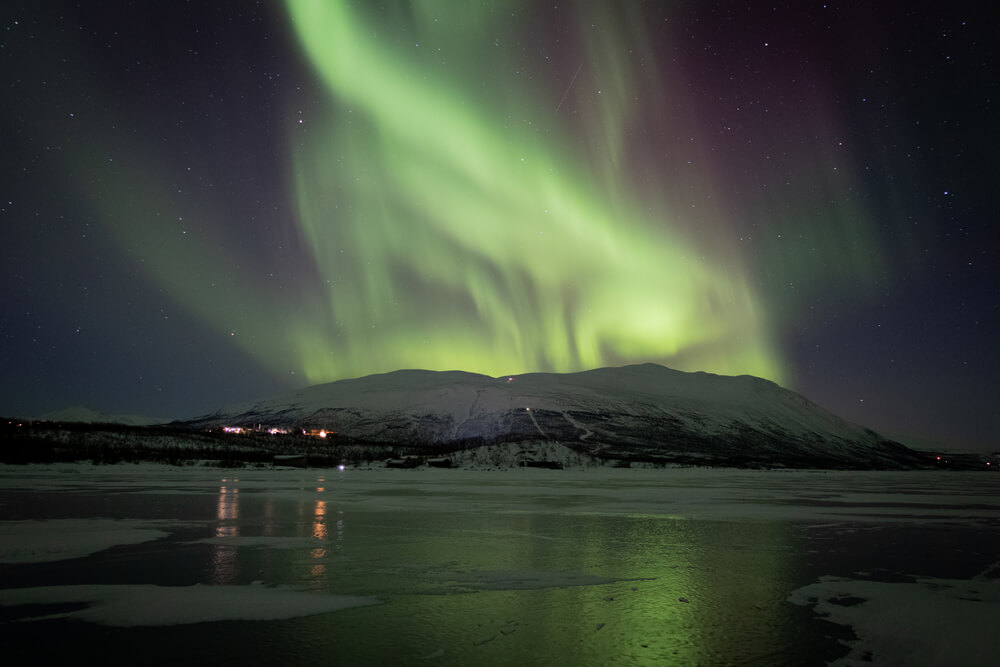
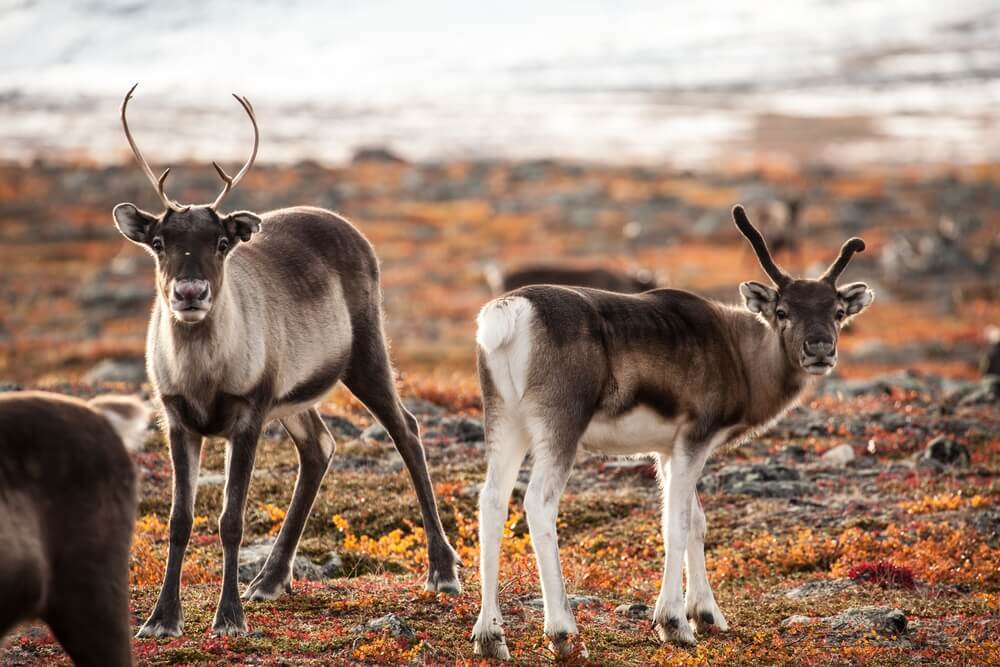
The main livelihoods in the region are based on public sector, tourism, forestry, mining, services, and reindeer herding. In the twin cities of Haparanda and Tornio the tourism economy is strongly based on cross-border shopping possibilities. The rest of region’s tourism products are linked to cultural tourism and nature-based tourism, the main attraction elements being fishing culture (Kukkolankoski/Kukkolaforsen), Aavasaksa Imperial Cottage, Lake Villages, Arctic Circle, midnight sun and northern lights, and the Sámi culture, for example.

There are cultural tourism routes (https://www.swedishlapland.com/map-stories/kulturrika-tornedalen/) and the Northern Lights Road (Revontultentie, FI, Norrskensvägen, SE). The latter is 620 kilometers long, connecting the region to Norway and the Arctic Sea. In addition, there are local routes, such as Maupertuis trail (https://www.maupertuis.fi/reitit/) based on the French Royal Academy of Sciences expedition in 1739 led by mathematician Pierre Louis Moreau de Maupertuis; the objective of the expedition was to find out the exact shape of the Earth.

Overall, regional and local tourism products have a clear focus on cultural and heritage tourism, supported by historical and academic dimensions and connections to nature-based tourism.

Team

The team of the project belonging to UniBg is composed of an interdisciplinary team including experts in marketing, management, economy, and geography with a focus on tourism. Team members have research experience in cultural heritage management, participatory and collaborative processes in rural and urban contexts, and territorial regeneration from a sustainable perspective through tourism. All members also have national and international relationships with academics and practitioners developed during applied projects.

Roberta Garibaldi (Principal investigator) is a university professor who engages in training and research activities to promote regions, gastronomic and cultural tourism, and directs projects at an international level. She directs international projects and has experience with various Ministries of Tourism and organisations such as UNWTO and FAO. Garibaldi served as CEO of ENIT – National Tourism Agency under the Draghi government and as Vice President of the Tourism Committee of the OECD. She has been invited as keynote speaker at major events on tourism and holds numerous positions, including President of the Italian Association of Gastronomic Tourism. She is the author of 23 books and over 60 scientific publications. She has curated eleven editions of the Gastronomic Tourism Report.

Federica Burini (role to be defined) is an Associate Professor of Geography at the Department of Foreign Languages, Literatures, and Cultures at the University of Bergamo. She coordinates the Imago Mundi Lab and contributes to the ITSM Center. Additionally, she presides over the international Planning and Management of Tourism Systems program. Her primary research interests focus on participatory processes and collaborative mapping in rural and urban contexts to promote territorial regeneration from a sustainable perspective, especially in rural areas of Sub-Saharan Africa and Europe. Among her recent publications are: *Tourism facing a Pandemic. Dalla crisi alla ripresa* (2020), *Challenge-Based Learning per lo sport e il turismo sostenibile. Un percorso formativo di governance territoriale multilivello* (2022).

Dauro Mattia Zocchi (Research fellow) is a research fellow in geography at the Department of Foreign Languages, Literatures, and Cultures at the University of Bergamo. He holds degrees in business administration and gastronomic sciences. In 2022, he earned a PhD in Eco-gastronomy, Education, and Society at the University of Gastronomic Sciences of Pollenzo. His primary research interests include food geography, food scouting, and the promotion of food heritage in rural and marginalised areas. He has contributed to research projects in Italy, Peru, Bolivia, Kenya, and Tanzania. He is the author of 10 edited books and over 20 scientific publications.