


How can intangible cultural heritage be made accessible and transformed into cultural and creative tourism experiences? A study visit to Wallonia, Belgium, as part of the CROCUS project, explores the role of local traditions—from lacemaking to the Carnival of Binche—highlighting community involvement, craft skills and new approaches to bringing living heritage into tourism.
By Greg Richards, Professor at Breda University of Applied Sciences and Tilburg University in the Netherlands.
As part of the Crocus Project on Cross-Border Cultural and Creative Tourism in Rural and Remote Areas we have been looking for examples of business models that can help inform our work. We have been looking at many different types of Cultural and Creative Tourism (CCT), including experiences based on both tangible and intangible cultural heritage. Our literature review of the CCT field indicated that Intangible Cultural Heritage (ICH) is particularly important for rural areas, given the relative lack of tangible heritage resources.
We have therefore paid particular attention to new business models based on ICH. In this respect we have been lucky to collaborate with our friends at the Living Heritage Journeys Project, in which partners from six EU countries are developing innovative methods to incorporate ICH into sustainable and meaningful tourism experiences. As we had a lot of contact with our Living Heritage Journeys colleagues from Thomas More in Belgium, we also decided it would be useful for ATLAS to take a look at what is happening in terms of ICH and CCT just across the border in Belgium.
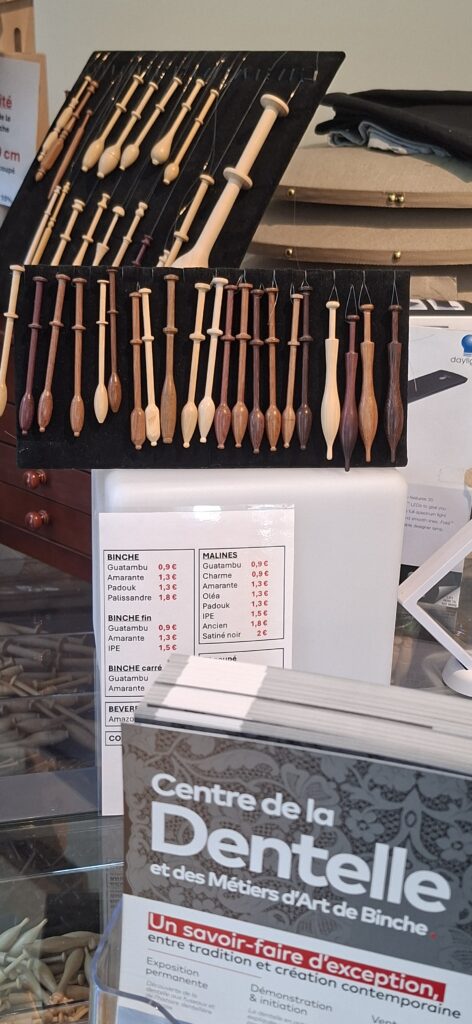
Our recent study visit, focussing on ways in which intangible heritage can be utilised in the development of rural cultural and creative tourism, took in the Wallonian region of Belgium. Wallonia positions itself as a region of heritage and culture, highlighting Artistic creation, folklore and traditions, including Carnivals, Giants, Marches and Firework displays. We visited a number of sites related to ICH in the region.
For example, the small city of Binche (population 34,000) is a major Carnival destination and a centre for craft production. The Lace and Crafts Center of Binche is a non-profit association, which was founded in 1989. It has a shop and the “Le Fuseau” exhibition space, located in the Main Square of Binche, where two professional lace makers carry on the art of lace making by demonstrating it for visitors, who also have the opportunity of seeing pieces in the making. The lace makers were much sought-after for demonstrations in Belgium and abroad and lauded with international prizes, underlining the enduring nature of the lace making tradition of Binche. Lace was first mentioned in Binche in 1697, and by the 18th century there were one thousand lace makers and that “so much lace was made there, it maintains two-thirds of the Town”. The number of lace makers peaked in 1856, with 1,800 lace makers out of a population of around 6,000. Now the ICH of Binche lace is sustained by a dedicated and largely volunteer community of enthusiasts.
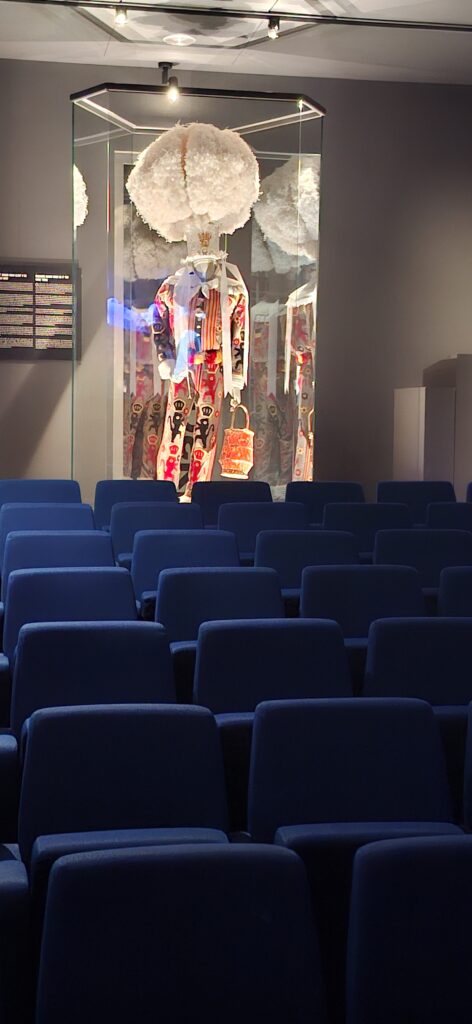
The International Museum of Carnival and Masks (MUMASK) sustains the intangible heritage of Binche by linking to celebrations and rituals around the world…….